
Zone-level inefficiencies
Ambient, chilled and frozen areas ran in silos yet shared the same slotting and replenishment problems. SKUs were rarely positioned for efficient access, slowing pick rates.
Case Studies / Food & Beverage
A leading UK food and beverage brand operating a national distribution centre that supplies thousands of outlets daily, across ambient, chilled and frozen zones.
The approach
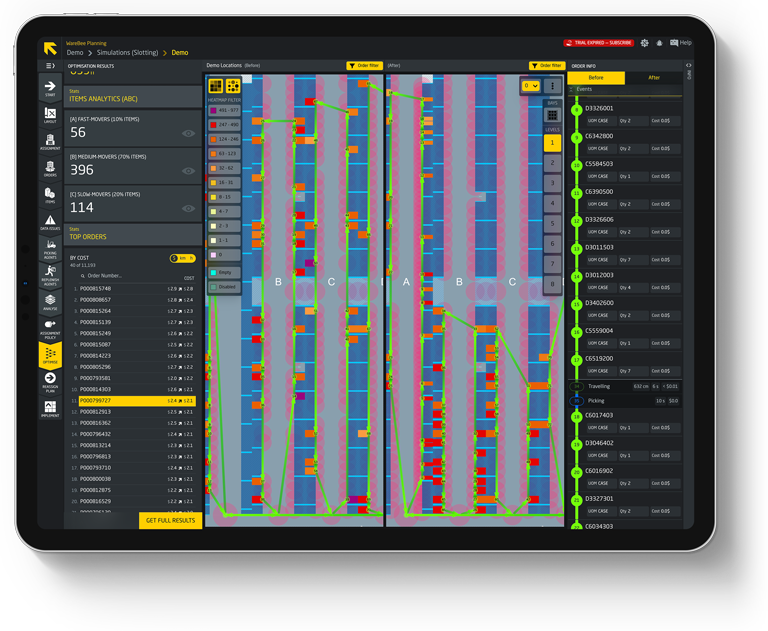
WareBee deployed its digital twin to replicate the facility across every zone. Using SKU velocity and frequency analysis, affinity groupings and labour simulations, the team surfaced hidden inefficiencies and tested improvements in slotting, replenishment and tote fill before any change touched the floor.
What we found
Ambient, chilled and frozen areas ran in silos yet shared the same slotting and replenishment problems. SKUs were rarely positioned for efficient access, slowing pick rates.
Containers and roll cages were underutilised, with picking density well below potential, and tote usage lacked optimisation logic, raising handling effort per shipment.
Congested aisles and poorly sequenced totes slowed navigation, and workforce planning missed zone-specific peaks: overstaffed in one zone, bottlenecked in another.
Tote fill density was inconsistent, and heavy items were sometimes stacked above light ones, increasing rework and damage risk in transport.
High-velocity SKUs in small locations forced frequent replenishment, while low-velocity SKUs held prime real estate in high-turnover zones, lengthening pick routes.
What we did
Re-slotted fast movers in ambient, chilled and frozen areas to minimise walking and speed picks.
Moved high-frequency SKUs to waist level, cutting fatigue and improving safety.
Improved tote fill sequencing and dolly-board routes, maximising picks per tote with heavy-to-light stacking.
Automated alerts for slot degradation, route friction and high-variance locations.
Quantified baseline performance and simulated improvements before committing physical changes.
Forecast zone-specific demand and matched staffing to store dispatch waves.
The outcome
WareBee delivered ROI within three months: travel per picker down 22%, picking productivity up 12% across all zones, shipment density up 18% and 15% fewer replenishment tasks, with real-time visibility that supports proactive decisions every shift.
Why WareBee
In food distribution every pick must be fast and accurate. WareBee's zone-aware simulations, tote optimisation and ergonomic improvements lifted pick productivity, maximised tote fill and streamlined labour, all while improving employee safety and on-time delivery quality.
Bring a data export to the demo and we'll build the first view of your own warehouse, not a canned one.
Required for the site to work. Bot protection (__cf_bm cookie set by Cloudflare) and form rate-limiting (one-way HMAC of your IP, 1-hour expiry). Cannot be disabled.
Anonymized traffic stats via Cloudflare Web Analytics (cookieless). Helps us understand what pages people visit.
Save-and-resume for long forms (localStorage). If off, you'll need to complete forms in one sitting.